- Home
- About Us
- Products
- Control Panel
- Power Distribution Box
- Power Distribution Panel
- Electrical Control Panel
- Motor Control Center Panel
- VFD Control Panel
- Power Control Center Panels
- Variable Frequency Drive Panel
- Cold Chain MCC Panel
- Low Tension Panels
- Electrical Switchgear Control Panel
- Automatic Power Factor Control (APFC) Panels
- Motor Control Centre (MCC) Panels
- Power Factor Correction Panel
- Water Treatment Plant Panel
- DG Synchronization Panel
- Star Delta Starter Control Panel
- Feeder Pillars Panel
- Electrical MCC Panel
- Automatic Control Panel
- Fully Automatic Electrical Control Panel
- Three Phase Control Panel
- Automatic Electric Control Panel
- Feeder Pillar Box
- Single Phase Power Distribution Panel
- Automation Control Panel
- Auto Transformers Starter
- Boiler Control Panel
- Industrial Power Control Center Panel
- Control Desk Panel
- Temperature Scanner
- Distribution Panel
- Synchronized AMF Panel
- Ccms Street Light Control Panel
- VCB Panel
- HT Panels
- LT Panels
- PLC Panels
- MCC Panels
- Electric Control Panel
- HMI Control Panel
- LT Distribution Box
- LT Distribution Boxes
- Industrial Electrical Control Panel
- Star Delta Motor Control Panel
- MCC CUM AC Drives Panel
- Single Phase Control Panel
- Drawout MCC Enclosures
- Change Over Panel
- Water Pump Control Panels
- Power Control Center Panel
- Soft Starter Panel
- Three Phase Feeder Pillar Panel
- Cold Store MCC Panel
- Industrial MCC Panels
- Remote Control Panels
- Main LT Control Panel
- ACB Distribution Panel
- DOL Starter Control Panel
- Meter Panel Board
- High Tension Panel
- Three Phase HT Panels
- Instrument Control Panels
- Drive Panels
- Drive Panel
- Capacitor Panel
- Electrical Panels
- HT Panel
- Auto Transformer Starter Panel
- VFD Panel
- Generator Control Panel
- Load Break Switch Panel
- Drawout Panel
- Thyristor Control Panel
- Servo Cable
- LXM26 Servo Cable
- Schneider Servo Cable VW3M8102R50
- Schneider Servo Cable VW3M5105R50
- Schneider Servo Cable VW3M5104R50
- Schneider Servo Cable VW3M8102R30
- Schneider Servo Cable VW3M5101R30
- Schneider Servo Cable VW3M5101R50
- Schneider Servo Cable VW3M5102R50
- Schneider Servo Cable VW3M8102R100
- Schneider Servo Cable VW3M5103R50
- Schneider Servo Cable VW3M5100R50
- Schneider Servo Cable VW3M5101R100
- Servo Cable & Encoder Cable & Cantap
- LXM23 Servo Cable
- Circuit Breaker
- Programmable Logic Controller
- Schneider PLC, TM200, TM241, TM262, TM221, M340, M580, TM172
- Schneider Modicon M340 PLC
- Schneider Modicon M238 PLC
- Schneider Modicon M258 Plc
- Schneider Modicon M262 Logic Controller
- Schneider Modicon M241 Logic Controller
- Schneider Modicon M251 Logic Controller
- Programmable Logic Controllers
- Schneider Modicon M171 / M172 Logic Controllers
- Proximity Sensor
- Plc Panel
- Pcc Panel
- Servo Drive
- Power Contactor
- Changeover Switch
- Variable Speed Drive
- Soft Starter
- Schneider Drives
- Amf Panel
- Plug And Socket
- Schneider EM6400NG+, Hexa Series, PM2000, EM1000, EM1200 Series
- Mccb
- Electrical Push Button & Control Station
- ACB
- Schmersal Limit & Safety Switch
- Havells HID MCCB
- Tesys Island
- RXM Schneider Electric Current Relay
- Schneider Limit Switch
- LXM16 Servo Cable
- Power Capacitor
- Motor Protection Circuit Breaker
- DC Drive Panel
- Cold Room Control Panel
- 750VA APC Uninterruptible Power Supply
- Smps Power Supplys
- Proface HMI
- APFC Panels
- Scada Development
- Sub Station
- LT Distribution Panels
- Electrical Control Panels
- PLC Control Panel
- Control Panel
- Updates
- Gallery
- Contact Us
Mccb
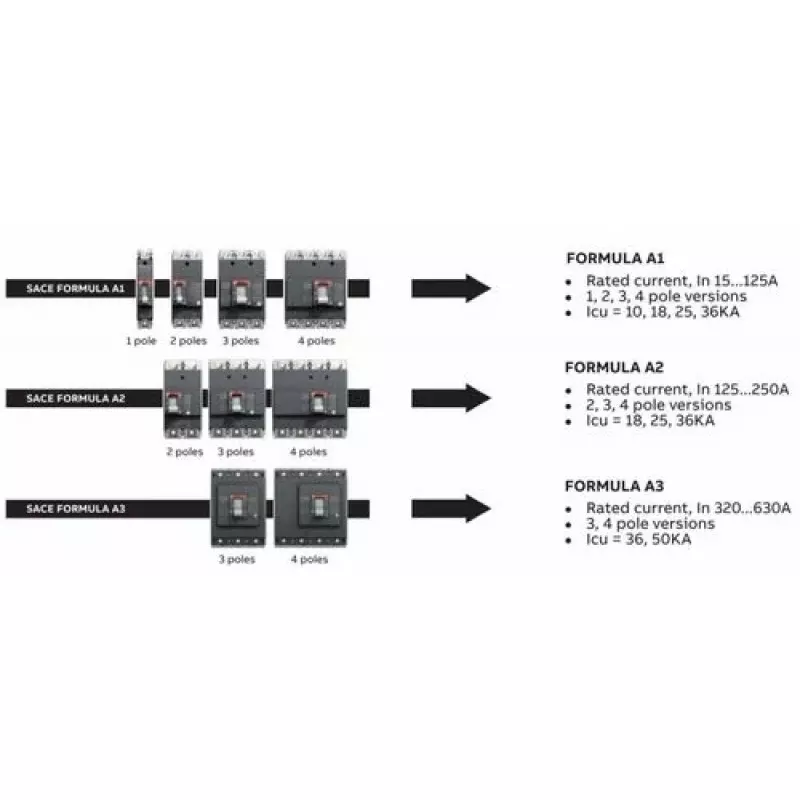
The MCCB comes into its own at feeder fault, allowing additional service to the rest of the system without interruption. The criteria used for selecting MCCBs include fault level at the point of installation, continuous load current, and the type of downstream equipment. Frame size is chosen based on either the motor rating or connecting load and the breaking capacity is sized to match available short circuit current, thereby allowing the MCCB to clear the ground fault without damaging contacts.
We have experience with Schneider and ABB MCCBs used in PCC panels, MCC panels, distribution boards and dedicated feeders. When selecting settings for adjustable thermal and magnetic MCCBs, these are based on cable size and co-ordination with the upstream ACB. For capacitor banks and high inrush loads, settings are set to avoid unnecessary nuisance tripping upon energization. The layout for terminal spreader, phase barrier and proper busbar connections are considered to reduce heat at the termination of the circuit.
By virtue of how the mounting arrangements are designed, there will be sufficient bending space for incoming and outgoing cables due to the fact that you cannot jam large aluminium or copper lugs into any corner. Each MCCB will complete mechanical operation tests, insulation resistance tests, and setting verifications prior to their incorporation in an MCC panel.
When used in US facilities, MCCBs are used to handle load variations that occur repeatedly, isolate faulted distribution feeders within an established time, and ensure selectivity in a power distribution system.
List of Mccb
ABB Tmax Mccb
Production is interrupted when a feeder trips inappropriately. Conversely, if a feeder does not trip when a fault occurs... Continue
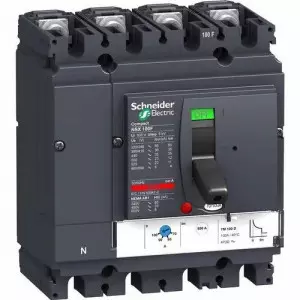
Schneider Mccb
Not every failure is a major event. Quite often, a small power overload can lead to an eventual breakdown of the supply ... Continue