- Home
- About Us
- Products
- Control Panel
- Power Distribution Box
- Power Distribution Panel
- Electrical Control Panel
- Motor Control Center Panel
- VFD Control Panel
- Power Control Center Panels
- Variable Frequency Drive Panel
- Cold Chain MCC Panel
- Low Tension Panels
- Electrical Switchgear Control Panel
- Automatic Power Factor Control (APFC) Panels
- Motor Control Centre (MCC) Panels
- Power Factor Correction Panel
- Water Treatment Plant Panel
- DG Synchronization Panel
- Star Delta Starter Control Panel
- Feeder Pillars Panel
- Electrical MCC Panel
- Automatic Control Panel
- Fully Automatic Electrical Control Panel
- Three Phase Control Panel
- Automatic Electric Control Panel
- Feeder Pillar Box
- Single Phase Power Distribution Panel
- Automation Control Panel
- Auto Transformers Starter
- Boiler Control Panel
- Industrial Power Control Center Panel
- Control Desk Panel
- Temperature Scanner
- Distribution Panel
- Synchronized AMF Panel
- Ccms Street Light Control Panel
- VCB Panel
- HT Panels
- LT Panels
- PLC Panels
- MCC Panels
- Electric Control Panel
- HMI Control Panel
- LT Distribution Box
- LT Distribution Boxes
- Industrial Electrical Control Panel
- Star Delta Motor Control Panel
- MCC CUM AC Drives Panel
- Single Phase Control Panel
- Drawout MCC Enclosures
- Change Over Panel
- Water Pump Control Panels
- Power Control Center Panel
- Soft Starter Panel
- Three Phase Feeder Pillar Panel
- Cold Store MCC Panel
- Industrial MCC Panels
- Remote Control Panels
- Main LT Control Panel
- ACB Distribution Panel
- DOL Starter Control Panel
- Meter Panel Board
- High Tension Panel
- Three Phase HT Panels
- Instrument Control Panels
- Drive Panels
- Drive Panel
- Capacitor Panel
- Electrical Panels
- HT Panel
- Auto Transformer Starter Panel
- VFD Panel
- Generator Control Panel
- Load Break Switch Panel
- Drawout Panel
- Thyristor Control Panel
- Servo Cable
- LXM26 Servo Cable
- Schneider Servo Cable VW3M8102R50
- Schneider Servo Cable VW3M5105R50
- Schneider Servo Cable VW3M5104R50
- Schneider Servo Cable VW3M8102R30
- Schneider Servo Cable VW3M5101R30
- Schneider Servo Cable VW3M5101R50
- Schneider Servo Cable VW3M5102R50
- Schneider Servo Cable VW3M8102R100
- Schneider Servo Cable VW3M5103R50
- Schneider Servo Cable VW3M5100R50
- Schneider Servo Cable VW3M5101R100
- Servo Cable & Encoder Cable & Cantap
- LXM23 Servo Cable
- Circuit Breaker
- Programmable Logic Controller
- Schneider PLC, TM200, TM241, TM262, TM221, M340, M580, TM172
- Schneider Modicon M340 PLC
- Schneider Modicon M238 PLC
- Schneider Modicon M258 Plc
- Schneider Modicon M262 Logic Controller
- Schneider Modicon M241 Logic Controller
- Schneider Modicon M251 Logic Controller
- Programmable Logic Controllers
- Schneider Modicon M171 / M172 Logic Controllers
- Proximity Sensor
- Plc Panel
- Pcc Panel
- Servo Drive
- Power Contactor
- Changeover Switch
- Variable Speed Drive
- Soft Starter
- Schneider Drives
- Amf Panel
- Plug And Socket
- Schneider EM6400NG+, Hexa Series, PM2000, EM1000, EM1200 Series
- Mccb
- Electrical Push Button & Control Station
- ACB
- Schmersal Limit & Safety Switch
- Havells HID MCCB
- Tesys Island
- RXM Schneider Electric Current Relay
- Schneider Limit Switch
- LXM16 Servo Cable
- Power Capacitor
- Motor Protection Circuit Breaker
- DC Drive Panel
- Cold Room Control Panel
- 750VA APC Uninterruptible Power Supply
- Smps Power Supplys
- Proface HMI
- APFC Panels
- Scada Development
- Sub Station
- LT Distribution Panels
- Electrical Control Panels
- PLC Control Panel
- Control Panel
- Updates
- Gallery
- Contact Us
Programmable Logic Controllers
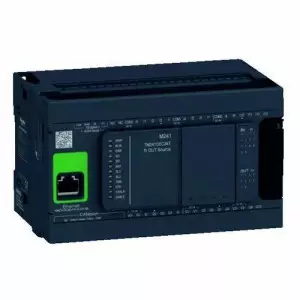
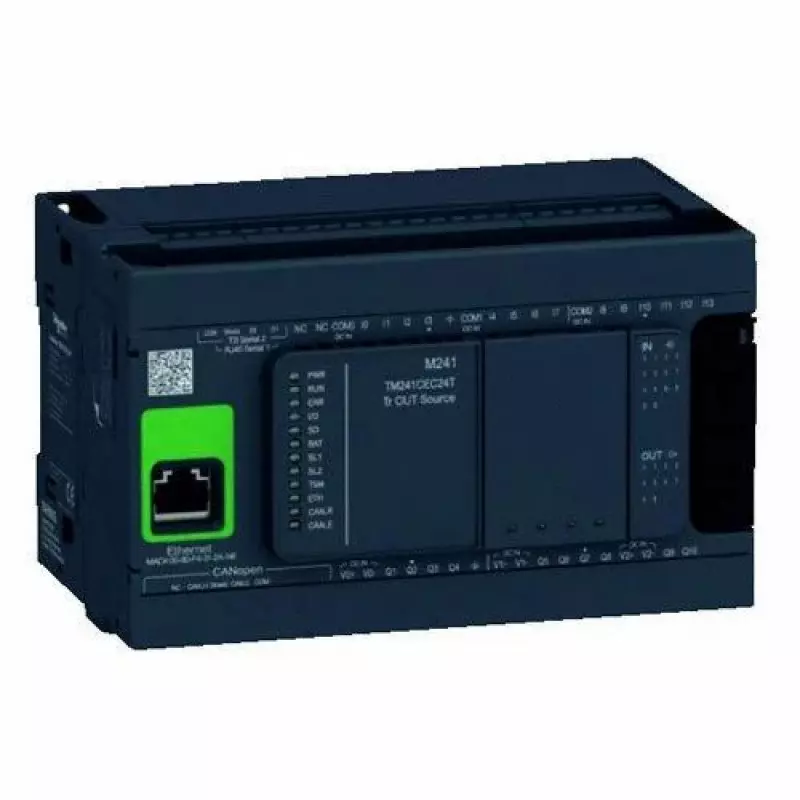
Programmable Logic Controllers Details
The term "Programmable Logic Controller" refers to an industrial digital computer that can be programmed to control, monitor and automate electromechanical processes in real time (typically) using inputs (sensors, switches), processing those inputs using a user-defined program, and then generating outputs (actuators) in a reliable manner under difficult environmental conditions.
The components of a typical PLC are: a Central Processing Unit (CPU); power supply; input/output (I/O) modules; and various communication interfaces. These components are all designed to give the PLC maximum reliability during continuous operation, so they can provide very accurate and repeatable results. Essentially, PLCs operate as real-time embedded control systems within manufacturing facilities, process industries, infrastructure systems, or in any other type of machine automation application that requires high reliability and accuracy.
The advanced capabilities of today’s PLCs from well-known companies such as Schneider Electric, Siemens, Allen-Bradley, and ABB that provide high-speed performance, Ethernet communication, remote control, motion control, data management and compatibility with SCADA / HMI systems.
PLCs serve a wide variety of industrial applications including packaging machinery; wastewater treatment plants; electric utilities; textile equipment; food and beverage processing; materials handling; and smart factories. Their modular construction, flexibility to program, ease of troubleshooting, and extended life expectancies provide automated solutions that are both affordable and ready for the future for all types of manufacturers, regardless of size.
Related Products
Schneider PLC, TM200, TM241, TM262, TM221, M340, M580, TM172
The evolution of machines has caused a rapid rate of change in control logic versus power wiring. Machines undergo modif... Continue
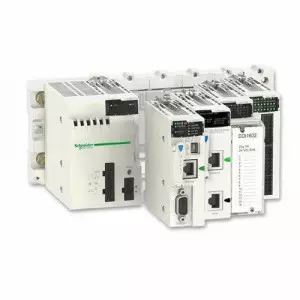
Schneider Modicon M340 PLC
Selection of the right controller in process automation can affect stability of production processes, unit troubleshooti... Continue
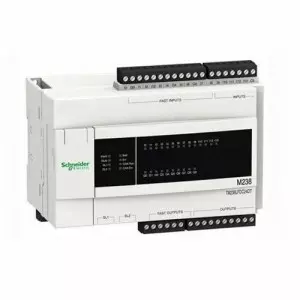
Schneider Modicon M238 PLC
Machine manufacturers typically have limited space inside the control panel, yet want a very quick control response, coo... Continue
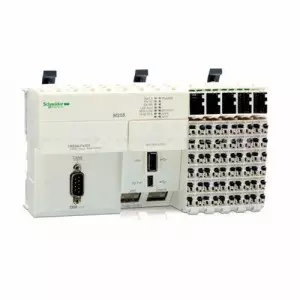
Schneider Modicon M258 Plc
Many machines operate on several coordinated axes, exchange information with other higher-level systems and yet have a c... Continue
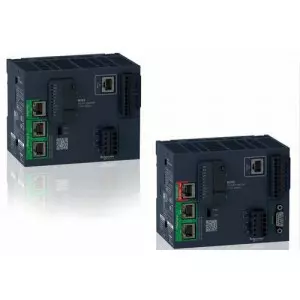
Schneider Modicon M262 Logic Controller
Because high-speed machines don’t wait for a controller to finish its scan, processors must respond immediately wh... Continue
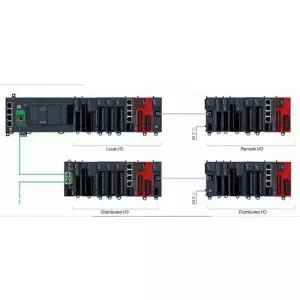
Schneider Modicon M241 Logic Controller
Both the Modicon M241 logic controller and its companion software package have a dual core processor that offers an extr... Continue
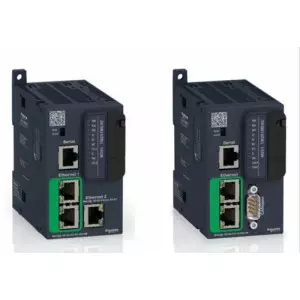
Schneider Modicon M251 Logic Controller
The Schneider Modicon M251 Control Module is an effective, small PLC that is utilised for Future Machine solutions with ... Continue
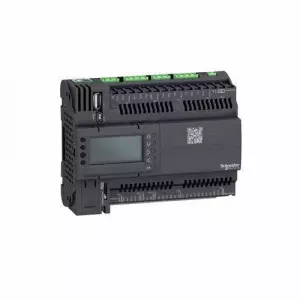
Schneider Modicon M171 / M172 Logic Controllers
Controllers are needed to operate continuously that are stable under long operating hours and flexible in expanding as s... Continue