- Home
- About Us
- Products
- Control Panel
- Power Distribution Box
- Power Distribution Panel
- Electrical Control Panel
- Motor Control Center Panel
- VFD Control Panel
- Power Control Center Panels
- Variable Frequency Drive Panel
- Cold Chain MCC Panel
- Low Tension Panels
- Electrical Switchgear Control Panel
- Automatic Power Factor Control (APFC) Panels
- Motor Control Centre (MCC) Panels
- Power Factor Correction Panel
- Water Treatment Plant Panel
- DG Synchronization Panel
- Star Delta Starter Control Panel
- Feeder Pillars Panel
- Electrical MCC Panel
- Automatic Control Panel
- Fully Automatic Electrical Control Panel
- Three Phase Control Panel
- Automatic Electric Control Panel
- Feeder Pillar Box
- Single Phase Power Distribution Panel
- Automation Control Panel
- Auto Transformers Starter
- Boiler Control Panel
- Industrial Power Control Center Panel
- Control Desk Panel
- Temperature Scanner
- Distribution Panel
- Synchronized AMF Panel
- Ccms Street Light Control Panel
- VCB Panel
- HT Panels
- LT Panels
- PLC Panels
- MCC Panels
- Electric Control Panel
- HMI Control Panel
- LT Distribution Box
- LT Distribution Boxes
- Industrial Electrical Control Panel
- Star Delta Motor Control Panel
- MCC CUM AC Drives Panel
- Single Phase Control Panel
- Drawout MCC Enclosures
- Change Over Panel
- Water Pump Control Panels
- Power Control Center Panel
- Soft Starter Panel
- Three Phase Feeder Pillar Panel
- Cold Store MCC Panel
- Industrial MCC Panels
- Remote Control Panels
- Main LT Control Panel
- ACB Distribution Panel
- DOL Starter Control Panel
- Meter Panel Board
- High Tension Panel
- Three Phase HT Panels
- Instrument Control Panels
- Drive Panels
- Drive Panel
- Capacitor Panel
- Electrical Panels
- HT Panel
- Auto Transformer Starter Panel
- VFD Panel
- Generator Control Panel
- Load Break Switch Panel
- Drawout Panel
- Thyristor Control Panel
- Servo Cable
- LXM26 Servo Cable
- Schneider Servo Cable VW3M8102R50
- Schneider Servo Cable VW3M5105R50
- Schneider Servo Cable VW3M5104R50
- Schneider Servo Cable VW3M8102R30
- Schneider Servo Cable VW3M5101R30
- Schneider Servo Cable VW3M5101R50
- Schneider Servo Cable VW3M5102R50
- Schneider Servo Cable VW3M8102R100
- Schneider Servo Cable VW3M5103R50
- Schneider Servo Cable VW3M5100R50
- Schneider Servo Cable VW3M5101R100
- Servo Cable & Encoder Cable & Cantap
- LXM23 Servo Cable
- Circuit Breaker
- Programmable Logic Controller
- Schneider PLC, TM200, TM241, TM262, TM221, M340, M580, TM172
- Schneider Modicon M340 PLC
- Schneider Modicon M238 PLC
- Schneider Modicon M258 Plc
- Schneider Modicon M262 Logic Controller
- Schneider Modicon M241 Logic Controller
- Schneider Modicon M251 Logic Controller
- Programmable Logic Controllers
- Schneider Modicon M171 / M172 Logic Controllers
- Proximity Sensor
- Plc Panel
- Pcc Panel
- Servo Drive
- Power Contactor
- Changeover Switch
- Variable Speed Drive
- Soft Starter
- Schneider Drives
- Amf Panel
- Plug And Socket
- Schneider EM6400NG+, Hexa Series, PM2000, EM1000, EM1200 Series
- Mccb
- Electrical Push Button & Control Station
- ACB
- Schmersal Limit & Safety Switch
- Havells HID MCCB
- Tesys Island
- RXM Schneider Electric Current Relay
- Schneider Limit Switch
- LXM16 Servo Cable
- Power Capacitor
- Motor Protection Circuit Breaker
- DC Drive Panel
- Cold Room Control Panel
- 750VA APC Uninterruptible Power Supply
- Smps Power Supplys
- Proface HMI
- APFC Panels
- Scada Development
- Sub Station
- LT Distribution Panels
- Electrical Control Panels
- PLC Control Panel
- Control Panel
- Updates
- Gallery
- Contact Us
Servo Cable
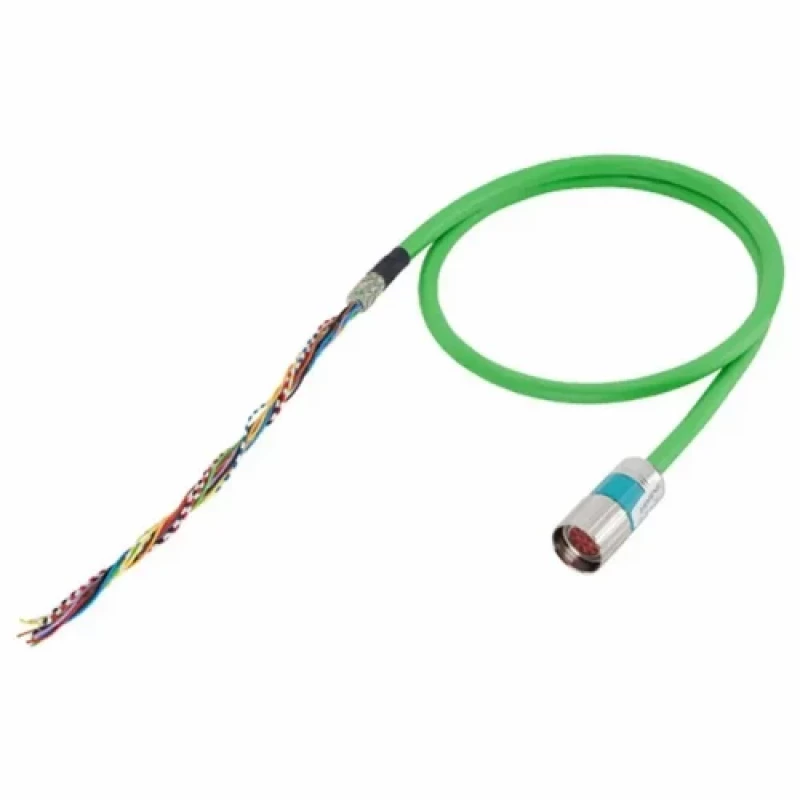
Servo cables aren't usually an area of focus at the beginning of motion control design; however, many motion faults begin at the cable. Servo cables that are designed for continuous flexing, for reliable and stable feedback transmission, and for noise-free communication between the servo drive and the motor can significantly reduce faults caused by cabling. For example, in a high-speed application, if there is a cable signal loss or shielding failure, positioning accuracy will be immediately affected. Therefore, when selecting cables, it is critical to consider many factors such as the type of servo drive, the motor rating, the routing path, and the bending radius of the cable, not just compatibility with the connector.
Cables in our inventory include LXM23 and LXM26 series, Schneider reference numbers VW3M5101, VW3M5102, VW3M5104, VW3M5105, and VW3M8102 along with encoder cables and hybrid power with data assemblies. The outer sheath material is chosen based on how the cable will be routed, through a tray or drag chain, or connected from the panel to the machine. Double-shielded cables wired according to proper grounding practices will protect the cable from electrical noise in industrial environments where VFD panels, motor control panels, and high-current feeders run parallel to each other.
Length matching is considered a critical factor for performance; excess coiling within the panel creates unnecessary heat and signal disruption while significantly increasing the stress on connectors when cabling is routed too short. We will confirm the correct pin configuration, brake core requirement, earthing continuity, etc., prior to shipping. Once our servo cables are installed into US automation lines, they are able to support very accurate movement control, repeatable positioning, and reliable communication regardless of the amount of vibration, temperature modulation, or continuous use cycles that may occur within the production environment.
List of Servo Cable
LXM26 Servo Cable
Cable is where you will see a majority of signal loss in motion systems instead of at the drive or motor. The cable expe... Continue
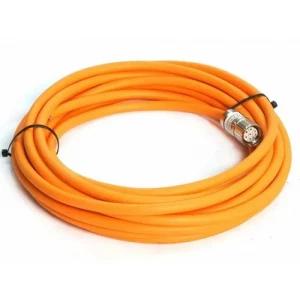
Schneider Servo Cable VW3M8102R50
In most cases before a servo system totally fails it will exhibit signs of wear out or erratic operation. Common issues ... Continue
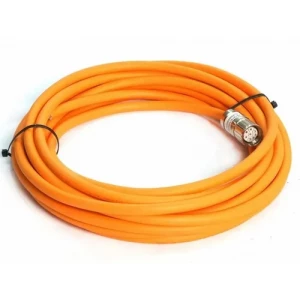
Schneider Servo Cable VW3M5105R50
Loose connections or unstable feedback cannot be tolerated in high-speed motion control. Any variation in the drive/moto... Continue
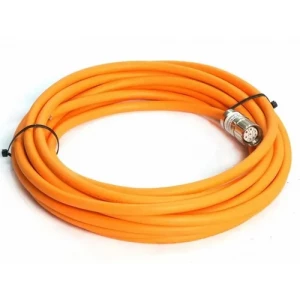
Schneider Servo Cable VW3M5104R50
The connection between a motor and its drive system affects motion control. Many features of motion control can be affec... Continue
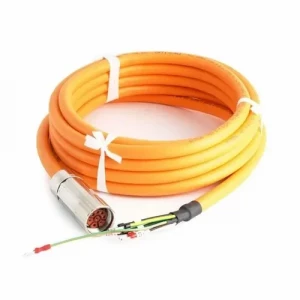
Schneider Servo Cable VW3M8102R30
The requirements for signal stability have not changed, even with shortened axis travel. The amount of room available fo... Continue
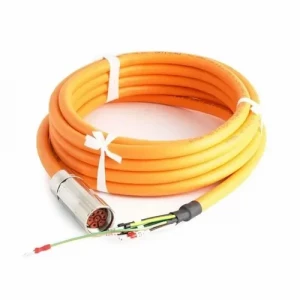
Schneider Servo Cable VW3M5101R30
Due to the compactness of most motion systems, there is little room for errors in the connectivity of these systems. The... Continue
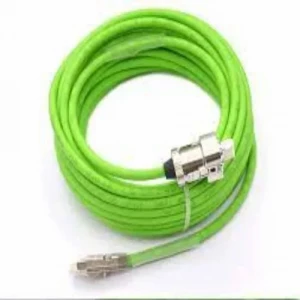
Schneider Servo Cable VW3M5101R50
Long travel axes can place varying levels of stress on your motion wires based upon cable weight, cable bend radius, and... Continue
Schneider Servo Cable VW3M5102R50
There are many factors that can cause a decrease in servo performance and wouldn’t necessarily show on the drive d... Continue
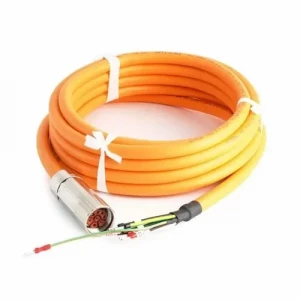
Schneider Servo Cable VW3M8102R100
Changing motion cable performance characteristics, such as weight, flexing cycles, and distortion of data signal, are du... Continue
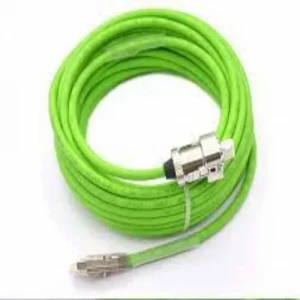
Schneider Servo Cable VW3M5103R50
With the increasing frequency of motion systems experiencing encoder errors due to inadequate interconnections, it is im... Continue
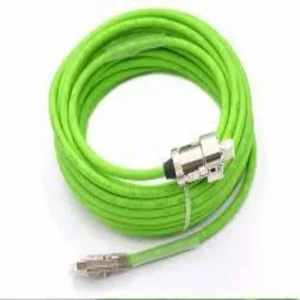
Schneider Servo Cable VW3M5100R50
Servo motors will not suddenly fail; the process begins with a slight change in position followed by random drive fault ... Continue
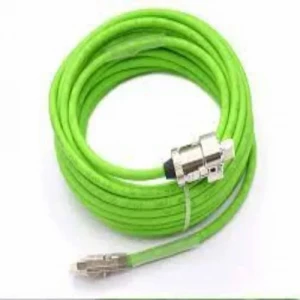
Schneider Servo Cable VW3M5101R100
As the machine's layout will span a long distance of travel, and because the cable is now a part of the actual motion sy... Continue
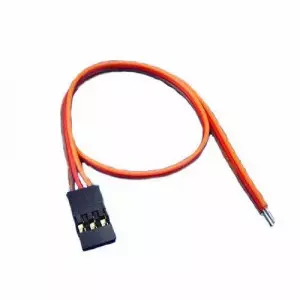
Servo Cable & Encoder Cable & Cantap
Motion control applications generally require multi-cable solutions and not just a single cable. All power signals, feed... Continue
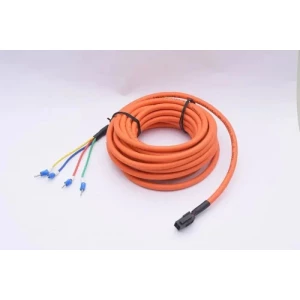
LXM23 Servo Cable
The Compact Servo Axis' faster cycle time combined with smaller movements create more stress on the servo motor's interc... Continue