- Home
- About Us
- Products
- Control Panel
- Power Distribution Box
- Power Distribution Panel
- Electrical Control Panel
- Motor Control Center Panel
- VFD Control Panel
- Power Control Center Panels
- Variable Frequency Drive Panel
- Cold Chain MCC Panel
- Low Tension Panels
- Electrical Switchgear Control Panel
- Automatic Power Factor Control (APFC) Panels
- Motor Control Centre (MCC) Panels
- Power Factor Correction Panel
- Water Treatment Plant Panel
- DG Synchronization Panel
- Star Delta Starter Control Panel
- Feeder Pillars Panel
- Electrical MCC Panel
- Automatic Control Panel
- Fully Automatic Electrical Control Panel
- Three Phase Control Panel
- Automatic Electric Control Panel
- Feeder Pillar Box
- Single Phase Power Distribution Panel
- Automation Control Panel
- Auto Transformers Starter
- Boiler Control Panel
- Industrial Power Control Center Panel
- Control Desk Panel
- Temperature Scanner
- Distribution Panel
- Synchronized AMF Panel
- Ccms Street Light Control Panel
- VCB Panel
- HT Panels
- LT Panels
- PLC Panels
- MCC Panels
- Electric Control Panel
- HMI Control Panel
- LT Distribution Box
- LT Distribution Boxes
- Industrial Electrical Control Panel
- Star Delta Motor Control Panel
- MCC CUM AC Drives Panel
- Single Phase Control Panel
- Drawout MCC Enclosures
- Change Over Panel
- Water Pump Control Panels
- Power Control Center Panel
- Soft Starter Panel
- Three Phase Feeder Pillar Panel
- Cold Store MCC Panel
- Industrial MCC Panels
- Remote Control Panels
- Main LT Control Panel
- ACB Distribution Panel
- DOL Starter Control Panel
- Meter Panel Board
- High Tension Panel
- Three Phase HT Panels
- Instrument Control Panels
- Drive Panels
- Drive Panel
- Capacitor Panel
- Electrical Panels
- HT Panel
- Auto Transformer Starter Panel
- VFD Panel
- Generator Control Panel
- Load Break Switch Panel
- Drawout Panel
- Thyristor Control Panel
- Servo Cable
- LXM26 Servo Cable
- Schneider Servo Cable VW3M8102R50
- Schneider Servo Cable VW3M5105R50
- Schneider Servo Cable VW3M5104R50
- Schneider Servo Cable VW3M8102R30
- Schneider Servo Cable VW3M5101R30
- Schneider Servo Cable VW3M5101R50
- Schneider Servo Cable VW3M5102R50
- Schneider Servo Cable VW3M8102R100
- Schneider Servo Cable VW3M5103R50
- Schneider Servo Cable VW3M5100R50
- Schneider Servo Cable VW3M5101R100
- Servo Cable & Encoder Cable & Cantap
- LXM23 Servo Cable
- Circuit Breaker
- Programmable Logic Controller
- Schneider PLC, TM200, TM241, TM262, TM221, M340, M580, TM172
- Schneider Modicon M340 PLC
- Schneider Modicon M238 PLC
- Schneider Modicon M258 Plc
- Schneider Modicon M262 Logic Controller
- Schneider Modicon M241 Logic Controller
- Schneider Modicon M251 Logic Controller
- Programmable Logic Controllers
- Schneider Modicon M171 / M172 Logic Controllers
- Proximity Sensor
- Plc Panel
- Pcc Panel
- Servo Drive
- Power Contactor
- Changeover Switch
- Variable Speed Drive
- Soft Starter
- Schneider Drives
- Amf Panel
- Plug And Socket
- Schneider EM6400NG+, Hexa Series, PM2000, EM1000, EM1200 Series
- Mccb
- Electrical Push Button & Control Station
- ACB
- Schmersal Limit & Safety Switch
- Havells HID MCCB
- Tesys Island
- RXM Schneider Electric Current Relay
- Schneider Limit Switch
- LXM16 Servo Cable
- Power Capacitor
- Motor Protection Circuit Breaker
- DC Drive Panel
- Cold Room Control Panel
- 750VA APC Uninterruptible Power Supply
- Smps Power Supplys
- Proface HMI
- APFC Panels
- Scada Development
- Sub Station
- LT Distribution Panels
- Electrical Control Panels
- PLC Control Panel
- Control Panel
- Updates
- Gallery
- Contact Us
Schneider Servo Cable VW3M5100R50
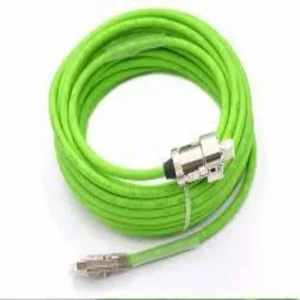
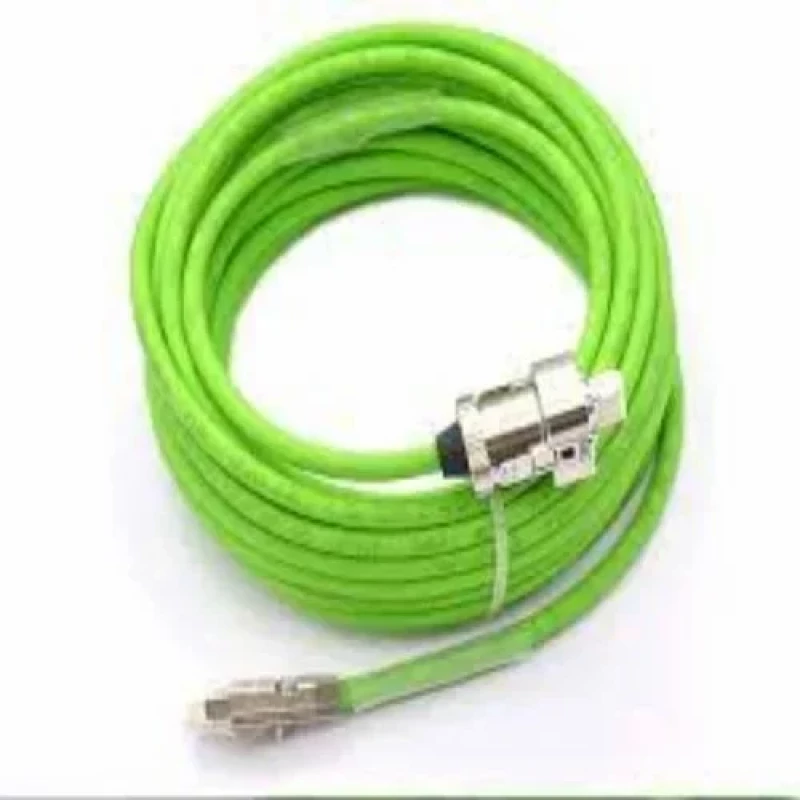
Schneider Servo Cable VW3M5100R50 Details
Servo motors will not suddenly fail; the process begins with a slight change in position followed by random drive fault messages and finally an unexpected failure. In many cases, the issue is caused by the moving cable used to transmit both power and feedback. The Schneider Servo Cable VW3M5100R50 is designed for high-demand motion applications where there is continual flexing of the cable, electrical noise and doors open for long periods. Perfect Automation & Innovation provides these cables for all installations where you want stable communication between the drive and motor in order to have accurate machines.
The way the conductors are designed allows for transmitting the required current without causing any temperature increase that could shorten the expected life of the insulation. By using fine-stranded cores, the cables operate very smoothly when used in drag chains and perform very well with respect to high flex cycles. Multiple layers of shielding ensure that the encoder signal stays clean even when these cables are run in parallel with high-current feeders and switching devices. The outer jacket material has been selected for its resistance to oil, abrasion and mechanical impact which are found in typical automated machines.
By using pre-built connectors we can also keep the pin configuration correct and reduce time to commission on site. secure locks help prevent intermittent contact due to vibration and high speed acceleration. cable lengths match actual axis travel therefore minimising excess loops and response time.
We test every cable for continuity, insulation resistance and shield effectiveness before shipping.
These servo cables are used in CNC machines, automated materials handling systems, packaging lines, and robotic assemblies. The precision of these positions, speed of response and uninterrupted feedback affects production consistency and uptime of equipment.
Related Products
LXM26 Servo Cable
Cable is where you will see a majority of signal loss in motion systems instead of at the drive or motor. The cable expe... Continue
Schneider Servo Cable VW3M8102R50
In most cases before a servo system totally fails it will exhibit signs of wear out or erratic operation. Common issues ... Continue
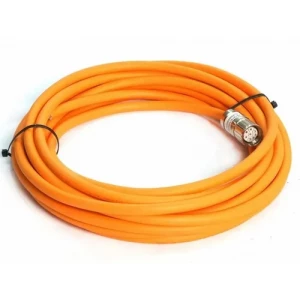
Schneider Servo Cable VW3M5105R50
Loose connections or unstable feedback cannot be tolerated in high-speed motion control. Any variation in the drive/moto... Continue
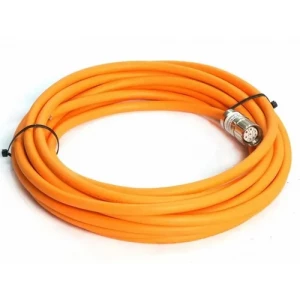
Schneider Servo Cable VW3M5104R50
The connection between a motor and its drive system affects motion control. Many features of motion control can be affec... Continue
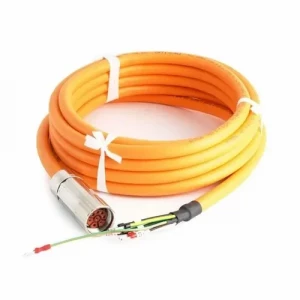
Schneider Servo Cable VW3M8102R30
The requirements for signal stability have not changed, even with shortened axis travel. The amount of room available fo... Continue
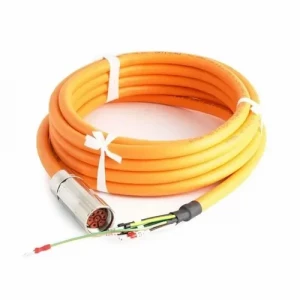
Schneider Servo Cable VW3M5101R30
Due to the compactness of most motion systems, there is little room for errors in the connectivity of these systems. The... Continue
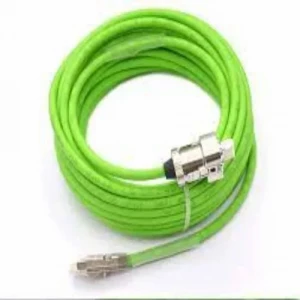
Schneider Servo Cable VW3M5101R50
Long travel axes can place varying levels of stress on your motion wires based upon cable weight, cable bend radius, and... Continue
Schneider Servo Cable VW3M5102R50
There are many factors that can cause a decrease in servo performance and wouldn’t necessarily show on the drive d... Continue
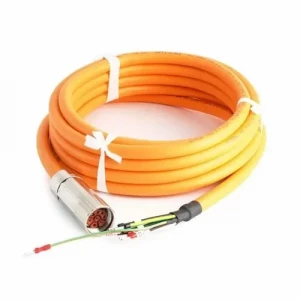
Schneider Servo Cable VW3M8102R100
Changing motion cable performance characteristics, such as weight, flexing cycles, and distortion of data signal, are du... Continue
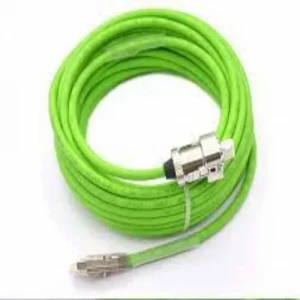
Schneider Servo Cable VW3M5103R50
With the increasing frequency of motion systems experiencing encoder errors due to inadequate interconnections, it is im... Continue
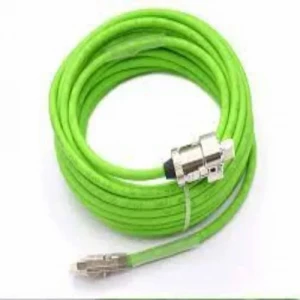
Schneider Servo Cable VW3M5101R100
As the machine's layout will span a long distance of travel, and because the cable is now a part of the actual motion sy... Continue
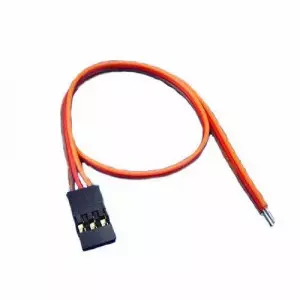
Servo Cable & Encoder Cable & Cantap
Motion control applications generally require multi-cable solutions and not just a single cable. All power signals, feed... Continue
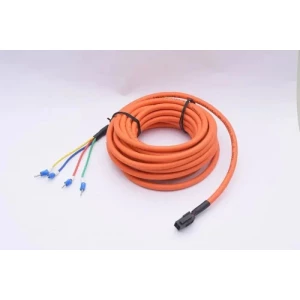
LXM23 Servo Cable
The Compact Servo Axis' faster cycle time combined with smaller movements create more stress on the servo motor's interc... Continue