- Home
- About Us
- Products
- Control Panel
- Power Distribution Box
- Power Distribution Panel
- Electrical Control Panel
- Motor Control Center Panel
- VFD Control Panel
- Power Control Center Panels
- Variable Frequency Drive Panel
- Cold Chain MCC Panel
- Low Tension Panels
- Electrical Switchgear Control Panel
- Automatic Power Factor Control (APFC) Panels
- Motor Control Centre (MCC) Panels
- Power Factor Correction Panel
- Water Treatment Plant Panel
- DG Synchronization Panel
- Star Delta Starter Control Panel
- Feeder Pillars Panel
- Electrical MCC Panel
- Automatic Control Panel
- Fully Automatic Electrical Control Panel
- Three Phase Control Panel
- Automatic Electric Control Panel
- Feeder Pillar Box
- Single Phase Power Distribution Panel
- Automation Control Panel
- Auto Transformers Starter
- Boiler Control Panel
- Industrial Power Control Center Panel
- Control Desk Panel
- Temperature Scanner
- Distribution Panel
- Synchronized AMF Panel
- Ccms Street Light Control Panel
- VCB Panel
- HT Panels
- LT Panels
- PLC Panels
- MCC Panels
- Electric Control Panel
- HMI Control Panel
- LT Distribution Box
- LT Distribution Boxes
- Industrial Electrical Control Panel
- Star Delta Motor Control Panel
- MCC CUM AC Drives Panel
- Single Phase Control Panel
- Drawout MCC Enclosures
- Change Over Panel
- Water Pump Control Panels
- Power Control Center Panel
- Soft Starter Panel
- Three Phase Feeder Pillar Panel
- Cold Store MCC Panel
- Industrial MCC Panels
- Remote Control Panels
- Main LT Control Panel
- ACB Distribution Panel
- DOL Starter Control Panel
- Meter Panel Board
- High Tension Panel
- Three Phase HT Panels
- Instrument Control Panels
- Drive Panels
- Drive Panel
- Capacitor Panel
- Electrical Panels
- HT Panel
- Auto Transformer Starter Panel
- VFD Panel
- Generator Control Panel
- Load Break Switch Panel
- Drawout Panel
- Thyristor Control Panel
- Servo Cable
- LXM26 Servo Cable
- Schneider Servo Cable VW3M8102R50
- Schneider Servo Cable VW3M5105R50
- Schneider Servo Cable VW3M5104R50
- Schneider Servo Cable VW3M8102R30
- Schneider Servo Cable VW3M5101R30
- Schneider Servo Cable VW3M5101R50
- Schneider Servo Cable VW3M5102R50
- Schneider Servo Cable VW3M8102R100
- Schneider Servo Cable VW3M5103R50
- Schneider Servo Cable VW3M5100R50
- Schneider Servo Cable VW3M5101R100
- Servo Cable & Encoder Cable & Cantap
- LXM23 Servo Cable
- Circuit Breaker
- Programmable Logic Controller
- Schneider PLC, TM200, TM241, TM262, TM221, M340, M580, TM172
- Schneider Modicon M340 PLC
- Schneider Modicon M238 PLC
- Schneider Modicon M258 Plc
- Schneider Modicon M262 Logic Controller
- Schneider Modicon M241 Logic Controller
- Schneider Modicon M251 Logic Controller
- Programmable Logic Controllers
- Schneider Modicon M171 / M172 Logic Controllers
- Proximity Sensor
- Plc Panel
- Pcc Panel
- Servo Drive
- Power Contactor
- Changeover Switch
- Variable Speed Drive
- Soft Starter
- Schneider Drives
- Amf Panel
- Plug And Socket
- Schneider EM6400NG+, Hexa Series, PM2000, EM1000, EM1200 Series
- Mccb
- Electrical Push Button & Control Station
- ACB
- Schmersal Limit & Safety Switch
- Havells HID MCCB
- Tesys Island
- RXM Schneider Electric Current Relay
- Schneider Limit Switch
- LXM16 Servo Cable
- Power Capacitor
- Motor Protection Circuit Breaker
- DC Drive Panel
- Cold Room Control Panel
- 750VA APC Uninterruptible Power Supply
- Smps Power Supplys
- Proface HMI
- APFC Panels
- Scada Development
- Sub Station
- LT Distribution Panels
- Electrical Control Panels
- PLC Control Panel
- Control Panel
- Updates
- Gallery
- Contact Us
Variable Speed Drive
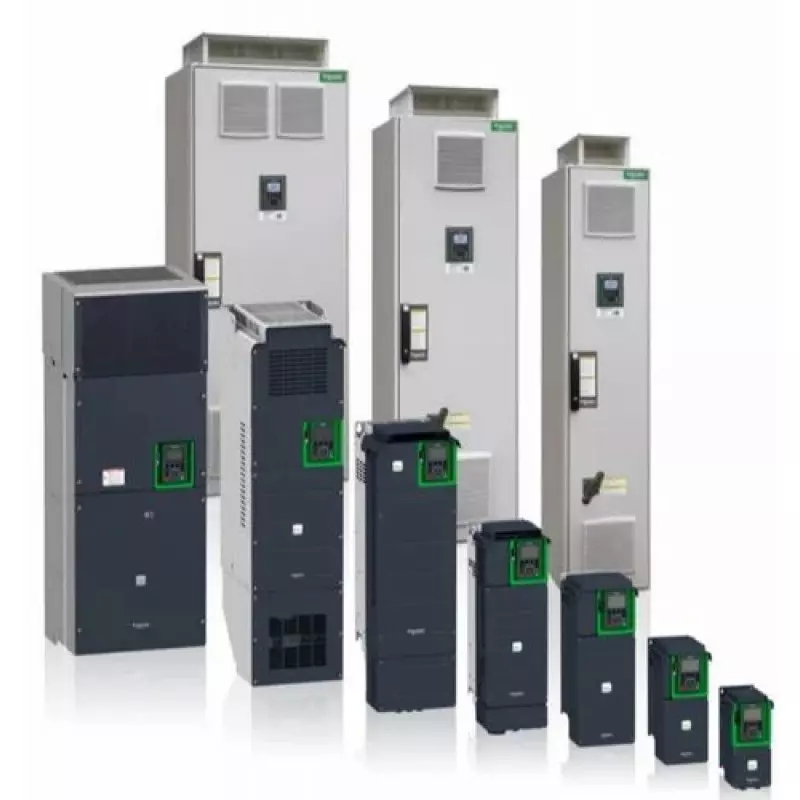
With the growing need for versatility in today’s manufacturing facilities, the variable-speed drive (VSD) has become important when a process no longer operates at one set speed for the entire shift. To begin working with a VSD, we need to check the load curve to determine its required speed range and stopping method. Applications such as fans and pumps require an energy-regulated operation, across partial load conditions. Conveyor and process lines require stable torque output at low speed.
In selecting the VSD rating, we need to consider the requirements for an overload, and the site's ambient temperature, in addition to the motor rated info provided on the nameplate.
We provide Schneider VSDs and also build VFD control panels that provide the drive with proper input protection, output filtering, and, where required, bypass switching. We verify the cable lengths between the motor and the drive, since long cable runs may require the installation of either an output reactor or a dv/dt filter.
We will set the parameters according to the application. Acceleration, deceleration, current limit, and braking mode will be verified with simulated loads.
Panel configuration is critical in keeping the ventilation path open as the way that heat is thrown off impacts drive life. The wiring of control terminals to PLC panel includes: remote start, speed reference and/or fault feedback. Communication can be provided via Modbus or Ethernet in cases where remote monitoring is required.
US plants can maintain smooth speed variation, controlled motor starting current and stable process flows with their variable frequency drives (U.S.) while experiencing fluctuations in power supply and frequent changes in loads.
List of Variable Speed Drive
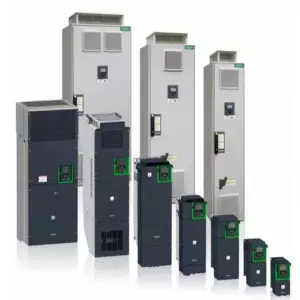
Schneider Variable Speed Drive
Every day we experience many different types of variable speed needs. A motor is not used in a constant speed mode. The ... Continue
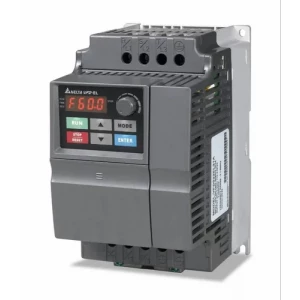
Electric VFD Control Panel
The control of motors and energy efficiency can be achieved by using an electric variable frequency drive (VFD). VFD Con... Continue